The Charles Mathews Project May 26th-August 20th, 2020
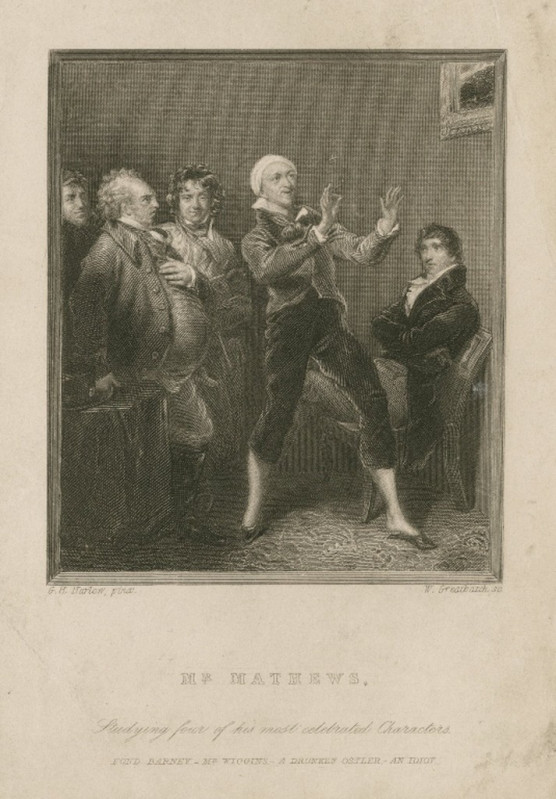
This practice-based project was inspired by the “at home theatricals” performed by early nineteenth-century solo performer, Charles Mathews. This project is part of a larger research investigation, examining the relationship between the performance of human “types” on scientific and theatrical stages – particularly performances that involved a lecturer or performer introducing audiences to an assembly of fascinating human beings from all walks of life. After engaging in lively discussions around Mathews’ work, research participants Jayna Mees and Brandon Pereira created a contemporary monopolylogue inspired by Mathews’ “at homes” as a means of further exploring the dramaturgical similarities between scientific and theatrical lecture performances.
Stage 1: Understanding the “At Home Theatrical”
During the first stage of the workshop, participants read several scholarly articles and consulted a series of primary source materials in order to understand the history and format of Mathews’ “at home theatricals.” Afterwards, they engaged in several discussions via Zoom around the dramaturgical structure of Mathews’ solo performances, as well as Mathews’ scientific creation method.


A Brief History
Charles Mathews was a skilled actor who performed on stages throughout England in the early c19 alongside the era’s luminaries. He tended to play supporting roles that capitalized on his unique mimetic abilities. But this wasn’t enough for Mathews. He felt somewhat limited by early c19 casting practices, which tended to place actors into specific “lines of business,” and was eager to show the public that he was capable of much more. So in 1814 he began to stage a series of solo performances that he called “at homes” – as though inviting the audience to join him for a pleasant evening of parlor entertainment. Over the courses of the evening, he would introduce audiences to as many as 30 different characters of varying ages, genders, occupations, classes, and nationalities.
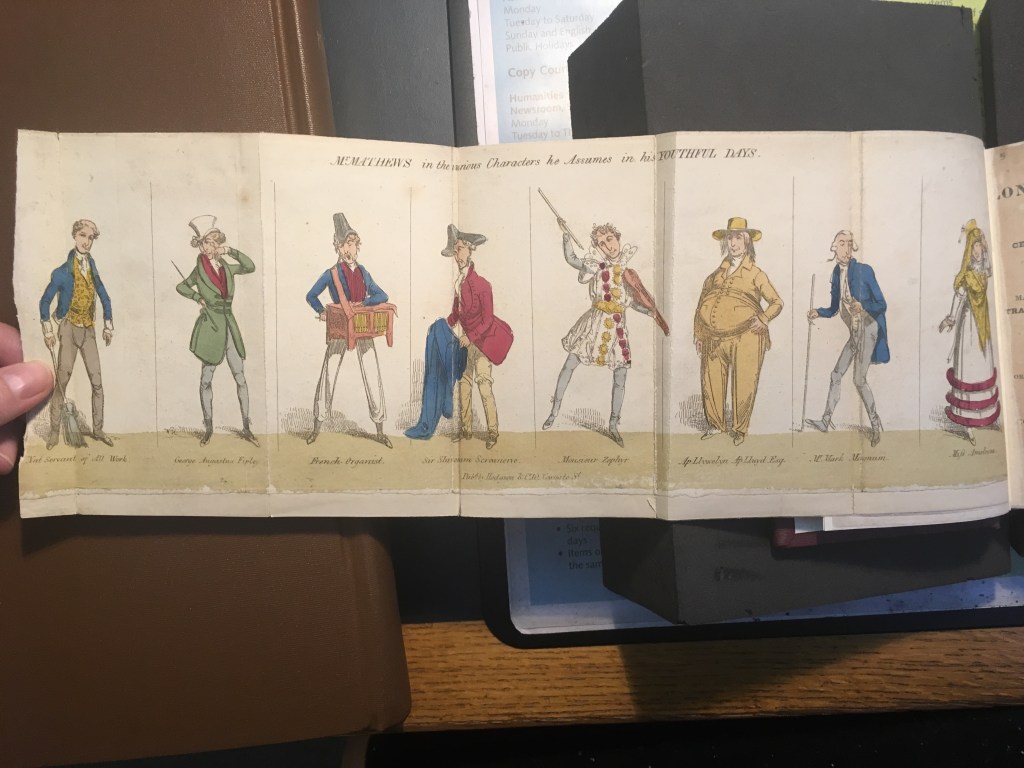
By engaging in a series of discussions around Mathews’ work, the research participants and I were able to identify four main features of Mathews’ “at home” performances: observation, intimacy, versatility/ mobility, and tempo.
Stage 2: Distilling the “At Home Theatrical.”
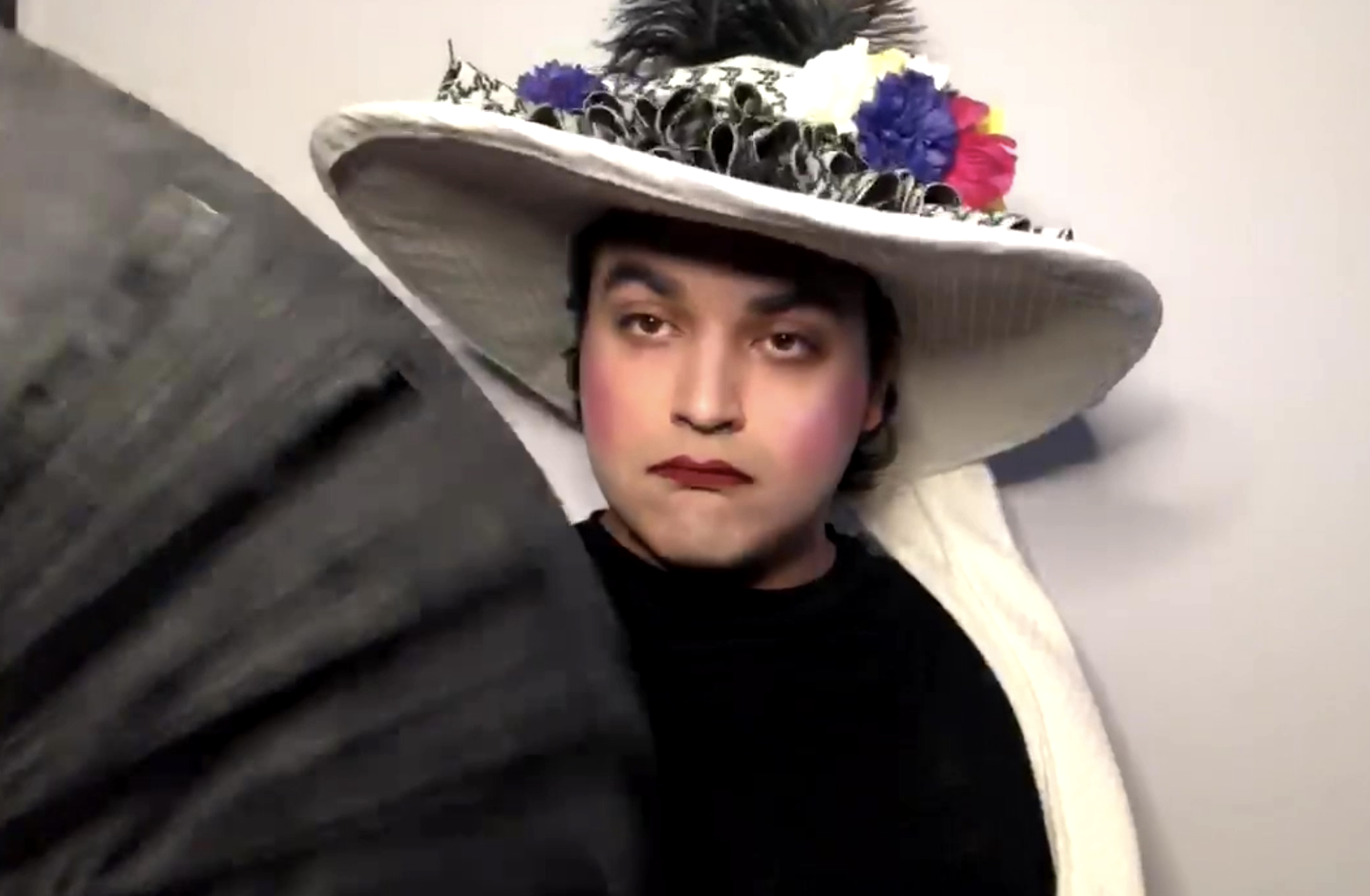
During the second half of this workshop participant Brandon Pereira, along with dramaturgical support from Jayna Mees and Marlis Schweitzer, distilled the dramaturgical elements of Mathew’s at home performances and wrote/presented a contemporary adaptation of a monopolylogue with four distinct characters: Fip, Jack, The Innkeeper, and Edmund. In so doing we attempted to revive Mathew’s intimate “at home” performance style as well as explore the ways in which he portrayed/transitioned between age, gender, and social class.



Afterlife
Following the workshop, Brandon Pereira produced the show through his own theatre company: Footstep Theatre Company, along with fellow company members Julian Iacob and Ellie Koffman. The final performance took place on August 28th via Zoom. To hear more about the show, and to keep up to date with Footstep Theatre Company’s projects, be sure to follow them on Instagram: @footsteptheatreco
 performingphrenology.com